




Description
Mazda unveiled the fourth generation of its famous MX-5/Miata in late 2014 as a 2015 model-year, thus continuing the story of the best-selling roadster in the world.
By 2014 and after almost one million units sold, the MX-5/Miata was the most popular two-seat, open-top vehicle on the market. It achieved that in just 25 years of production since the introduction of the first generation of this nameplate in 1989. Over time, the car grew in size and received more powerful engines, but it kept the main attributes that made it so special in Mazda's lineup: sportiness, agility, and affordability.
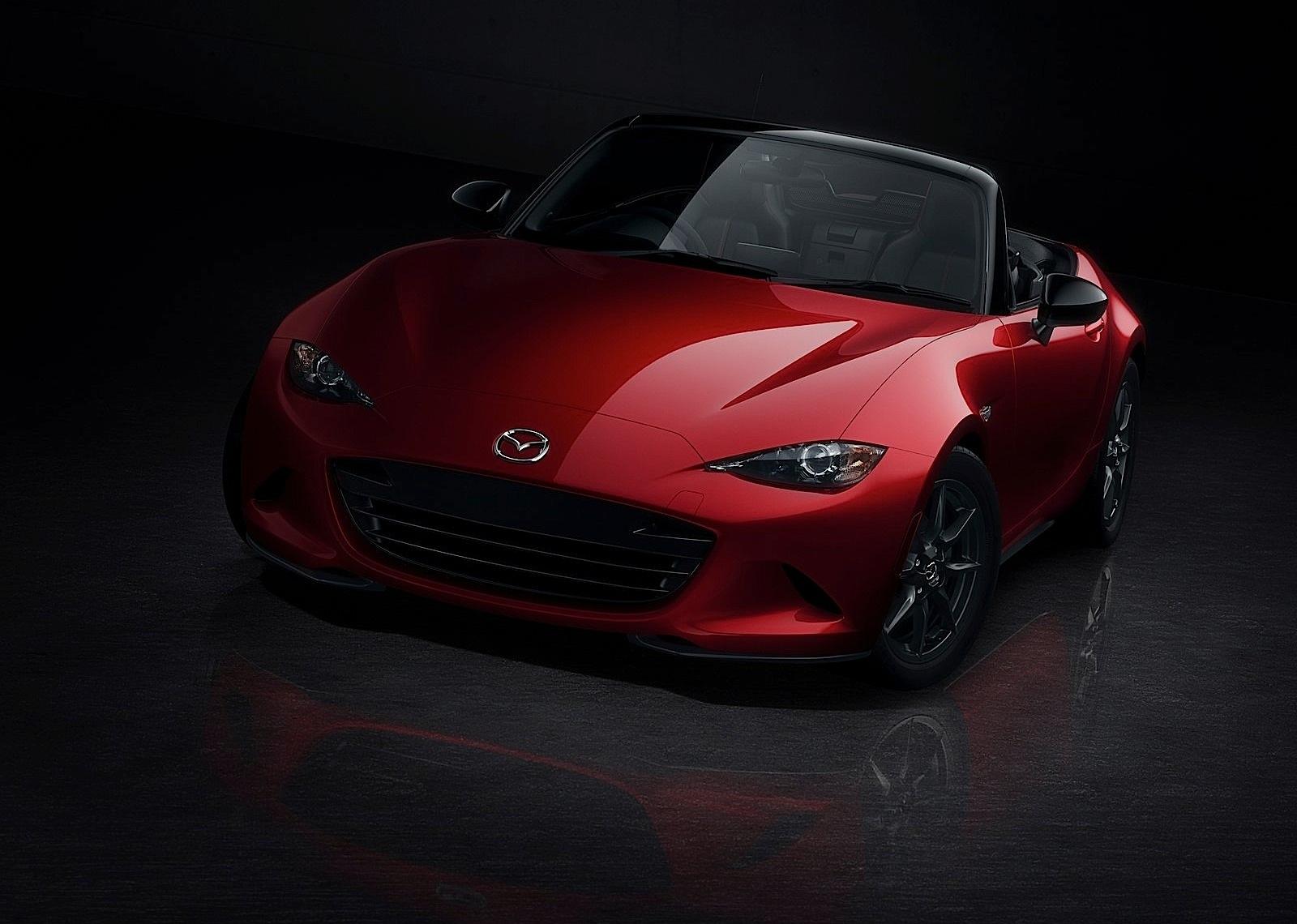
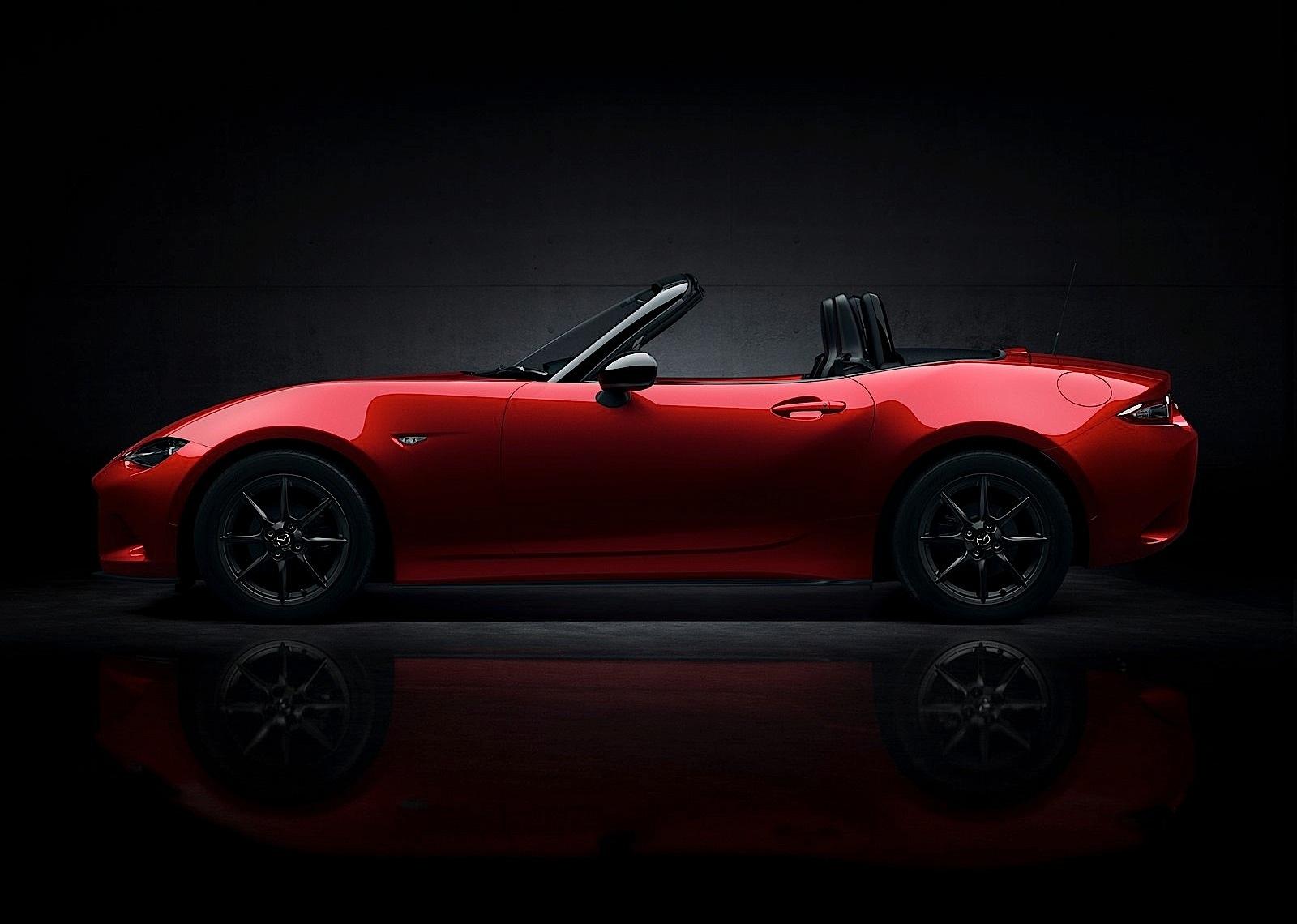
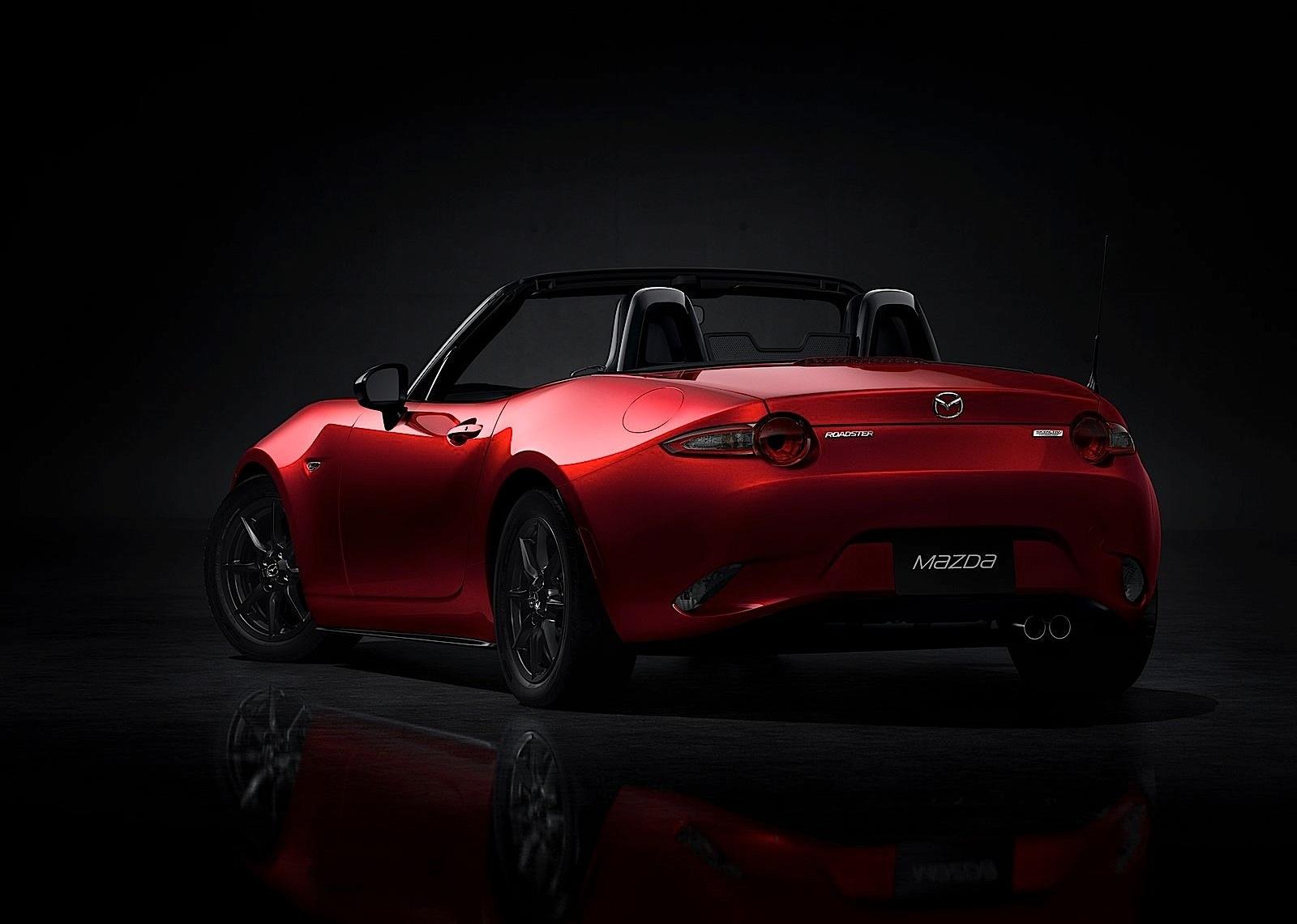
For the fourth generation, also known as the ND, the new model came with a new front fascia that featured teardrop-shaped headlights, although with the sharper sides pointing towards the car's center. The grille was entirely placed into the bumper and was flanked by a pair of scoops. These were also functional since they channeled the airflow to the brakes to cool the rotors. From its profile, the thick A-pillar served as a roll-over protection. In addition, behind the seats, the car was fitted with a second set of safety arches, neatly integrated into the car's look, behind the seats. Finally, at the back, the MX-5/Miata featured a short deck.
At first sight, the cabin looked cramped and uncomfortable. And yet, it was not the case, at least for people under 6.2 ft (1,85 m) tall. The bolstered seats were separated by a tall center console where the controls for the multimedia system were placed, even though Mazda installed a touchscreen for the infotainment unit. Since the cabin was minimalist, it didn't even have a glove box. Still, there were some storage spaces in the center console.
Under the hood, Mazda installed a choice of three inline-four engines, which provided between 131 PS (129 hp) and 160 PS (158 hp). All versions were paired as standard with a six-speed manual, while a six-speed automatic was offered for selected models and markets.
Press Release
Mazda Motor Corporation celebrated the unveiling of the fourth generation Mazda MX-5 (known as Roadster in Japan) together with fans at events held simultaneously in Japan, USA and Spain. The all-new MX-5, which adopts both SKYACTIV technology and Mazda's KODO-Soul of Motion design language, will be rolled out to global markets starting in 2015.
The MX-5 is an iconic model representing Mazda's vehicle-engineering philosophy—the pursuit of driving pleasure. "Innovate in order to preserve" was the motto for the fourth generation, as the development team searched for innovations that go beyond simple evolution. Environmental and safety demands are much more stringent than they were when the first generation MX-5 was introduced 25 years ago, but the fourth generation stays true to the model's original aim of offering the pure driving fun that only a lightweight sports car can. It achieves this through the adoption of SKYACTIV technology and refinement of its appeal to the senses and sensations through which people enjoy cars.
The design of the all-new MX-5 reveals another layer to Mazda's KODO design language. The exquisite proportions make the driver and passenger stand out, and both the interior and exterior evoke the exhilaration of open-top driving. It is the most compact of any generation MX-5 so far and is more than 100 kilograms lighter than the model it replaces, promising a dramatic leap in Jinba-ittai driving fun.
As of July 2014, total production volume of the Mazda MX-5 exceeded 940,000 units and it continues to hold the Guinness World Record for the best-selling two-seater sports car. This highly-celebrated model has received over 200 awards from around the globe including Japan Car of the Year 2005-2006.
Product concept
The significance given to maximising the Jinba Ittai and “Lots of Fun” experiences means that Mazda did much more than simply develop a compact sports car. Rather, the Mazda MX-5 was made to be looked at, to perform and respond faithfully to the driver’s will, to deliver a tangibly pleasing experience, to emphasise the owner’s character. Just having an MX-5 makes life more pleasant and more colourful. Mazda built the MX-5 with the hopes that it would become a presence that transcended its existence as a mere car. To carry on the MX-5’s rich tradition while more purely than ever embodying the essence of what appeals to the senses and sensations through which people enjoy cars, the development team made every effort to further evolve the product. Particular effort was concentrated on advancing three elements.
The first was to create a design that would set any heart pounding with excitement. Just one look at the fourth-generation MX-5 should get the pulse racing. Sitting in it should bring a smile to the driver’s face and instantaneously spark an urge to take the top down and go for a drive. And it should become a cherished part of the owner’s life as time goes on.
These attributes are what the development team aimed to express in an even purer state with the fourth-generation MX-5. In pursuit of them, they worked to add greater depth to the KODO design theme, to embody beautiful proportions that make the occupants stand out and to make the Mazda openair roadster experience all the more enjoyable.
They focused on the following:
- Beautiful proportions that make its occupants look good.
- A deeper expression of the KODO design theme that conveys agility
- Body surfaces that richly express the Japanese sense of contrast between stillness and motion.
- An interior design that melts away the boundaries between the inside and outside of the car.
- A snug feeling cockpit with symmetry and a singular axis that enables concentration on driving.
The second element is to deliver a driving experience that will captivate any driver. For every generation of the MX-5, importance was placed on appealing to the senses and sensations through which people enjoy cars rather than focusing merely on sheer performance. With “sensation” as the keyword for the fourth-generation Mazda MX-5, development efforts focused on making the car even more enjoyable to control and faithful in its response.
When driving in typical daily situations, the car responds directly to the driver’s will, as though it were extension of the driver’s own body. When enjoying a sporty run along winding roads, it responds faithfully to the driver’s actions in pleasingly light fashion.
Every effort went into further refining these attributes to realise the ultimate Jinba Ittai driving experience that will captivate any driver. Here are some of the highlights:
- The latest SKYACTIV Technology and Mazda’s “gram strategy” combine to reduce weight by more than 100kg over the third-generation model.
- Front-midship engine, rear-wheel drive configuration to achieve an ideal 50:50 front-rear weight distribution.
- The engine is located closer to the vehicle’s centre, the bonnet, boot lid, front fender and front and rear bumper reinforcements are made of aluminium, and the weight of the soft top is reduced. These combine to attain a lower yaw inertia moment and a lower centre of gravity.
- The pedals, controls, gauges and all equipment are optimally positioned to enable the driver to maintain a straight posture and drive comfortably.
- The height of the bonnet is lowered and the A-pillars and windshield header are moved rearward and made thinner to create a panoramic view with greater visibility of the road and peripheral movement.
- SKYACTIV-G direct-injection petrol engines are positioned longitudinally and specially tuned for the MX-5.
- New six-speed manual and automatic transmissions are also specially tuned for the MX-5.
- New lightweight yet highly rigid suspension fully leverages the know-how of SKYACTIV Technology, with a double-wishbone suspension in the front and multi-link set-up in the rear.
- The brake system is designed to maximise controllability and deliver reassuring effectiveness, plenty of braking power and an optimised posture when braking.
The third element is a pleasantly refreshing roadster experience that anyone can enjoy. It embodies a feeling of openness only possible in a convertible sports car, a feeling that can quickly lift anybody’s spirits anywhere and any time while enjoying an open-top drive.
Key elements here included:
- The MX-5 is equally beautiful whether the top is up or down.
- The interior is designed to maximise the pleasure of open-top driving.
- The soft top is easy to operate while seated.
- Wind control makes a pleasure of driving with the top down.
- Headrest speakers further enhance this enjoyment.
In addition to the three aforementioned elements, the fourth-generation further evolves the pleasure of an MX-5 adapted into an original car that reflects its owner’s character. Furthermore, satisfying the demands of the day are Mazda’s latest-generation human-machine interface (HMI) and MZD Connect*, Mazda’s next-generation in-car connectivity system that efficiently links the driver to the car and the outside world. A humancentric perspective was adopted in the pursuit of advanced safety based on the Mazda Proactive Safety philosophy to appeal to the senses and sensations through which people experience cars and enable the driver to fully enjoy the driving experience.
Design
For the fourth-generation Mazda MX-5, the development team was not going to be satisfied with a mere facelift. Nor were they prepared to aim for a design that simply accommodates current trends. Mazda’s only desire was to satisfy its vision of how an open-top lightweight sports car should look. It had to light a fire of excitement in the hearts of all those who relate to the stance Mazda assumed in developing the model over the past quarter century, and who crave a purer embodiment of Mazda’s icon.
Mazda’s first thought in aiming for the ultimate MX-5 design was to create beautiful proportions that make occupants stand out and look good. True to its Japanese name – Mazda Roadster – the basic form of the MX-5 makes those riding in the car the stars when seen with the top down and windows lowered. As such, the packaging engineers assigned to the development team worked closely together to examine a wide variety of elements related to a beautiful design when the top is down, and also to emphasise the driver’s seating position and embody proportions that best convey the satisfaction and exhilaration of driving the MX-5. This resulted in refinements such as moving the cabin a little toward the rear to create the appearance that the occupants are sitting at the body’s midpoint, and lowering the hip-point of the seats in conjunction with the new design’s low centre of gravity.
Based on these proportions, the development team took on the challenge of adding greater depth to the KODO design theme and fully expressing all they wished for in the new design. This included embodying KODO’s characteristic stance with an expression of stability that makes the vehicle appear as though it is firmly gripping the road surface, and creating an image of agility that makes the MX-5 appear ready to instantly change direction. The fine craftsmanship of Mazda’s renowned clay modellers created contours that cause reflections off the body’s surfaces to change in stunning fashion as the car moves. It makes the car look alive while at the same time creating a sense of emotional attachment that evokes a desire to stroke the surface with the palm of one’s hand. In addition, the lines travelling from the headlamps, peaking at the front fenders and converging in front of the rear tires before sweeping upwards over the rear fenders, create a sense of motion at varying speeds. Reminiscent of Japanese calligraphy, this represents the Japanese sensibilities bred into the Mazda MX-5.
The aim for the interior was to create a cockpit design that brings a smile to the face and gets the heart pounding simply by looking at it or sitting in the driver’s seat. One example is how the body panels wrap around to extend right into the door trim and thereby dissolve the visual boundaries between the vehicle’s interior and exterior. When sitting in the cockpit, the driver sees a ridge line that extends in powerful fashion from the upper part of the door trim to the top of the front fenders. In addition to providing a feeling of open space as only possible with an open-top body, the lines emphasise a feeling of oneness between driver and car. The design also attempts to heighten the pleasure of driving an open-top sports car by enabling the driver to experience the change in the surrounding environment in real time. When sunlight filters through the trees, for example, or light reflects as the sun sets. Careful attention paid to the shape of the door trim and making the quarter windows more compact aims to actively control the flow of air that reaches the cockpit. The result is a pleasant environment with just the right amount of wind blowing in when driving with the top down. In addition, positioning the tachometer and small-diameter steering wheel on the same axis creates perfect symmetry between the round climatecontrol louvers to the right and left of the instrument cluster. This serves to establish a single axis throughout the cockpit, while at the same time creating a pleasantly tight feeling that enables the driver to concentrate on driving.
With special attention to every detail, Mazda focused on building the MX-5 to transcend its existence as a mere automobile and become a sports car that owners will truly love.
While paying due respect to the British as the pioneers of the genre and to the first-generation Mazda MX-5 as the car that resurrected it in the modern age, the design aim for the all-new MX-5 was to create the ideal image of a Mazda lightweight sports car. Every inch of the fourth-generation MX-5 reflects this desire and the pleasure it intends to give to all who drive it.
History of the Mazda MX-5
Mazda unveiled the first-generation MX-5 at the Chicago Auto Show on 9 February 1989. At that time, virtually no open-type lightweight sports cars were available. The segment, which had blossomed in England in the latter half of the 1940s, gained popularity thanks to the agile handling, characteristic style and affordability of such vehicles. But after the 1960s, with the market focused more on safety and comfort, these cars had all but disappeared. The aim of the engineers and designers at Mazda who produced the first-generation model was simple: To bring back a fun-to-drive lightweight sports car for people around the world like themselves, people who love cars and love to drive.
To build a car that satisfies this passion for driving, they developed the Mazda MX-5 based on the principle that it would combine a lightweight, compact open top two-seater body with a frontmidship engine, rear-wheel drive configuration, a 50:50 front-rear weight distribution, a low yaw inertia moment and an affordable price. The simple, familiar nature of its compact sports car styling, the light feeling and faithful, linear response Mazda defined as Jinba Ittai, and the open feeling it offered resonated with car lovers around the world. It soon won a number of awards, gained widespread popularity, and fan clubs big and small began to spring up worldwide. The second-generation model was revealed at the Tokyo Motor Show in October 1997, and the thirdgeneration followed at the Geneva Motor Show in February 2005. Production reached 900,000 units in February 2011, as the MX-5 broke its own Guinness World Record as the world’s best selling two-seater sports car, a title it had first earned in May 2000.
Merely looking at the all-new MX-5 will make any car lover happy. From beginners to those with racing experience, drivers will enjoy the best drive of their lives. Putting the top down and feeling the refreshing breeze will bring a smile to any face. Drivers thus experience a world of driving pleasure as only the Mazda MX-5 can offer.