



Description
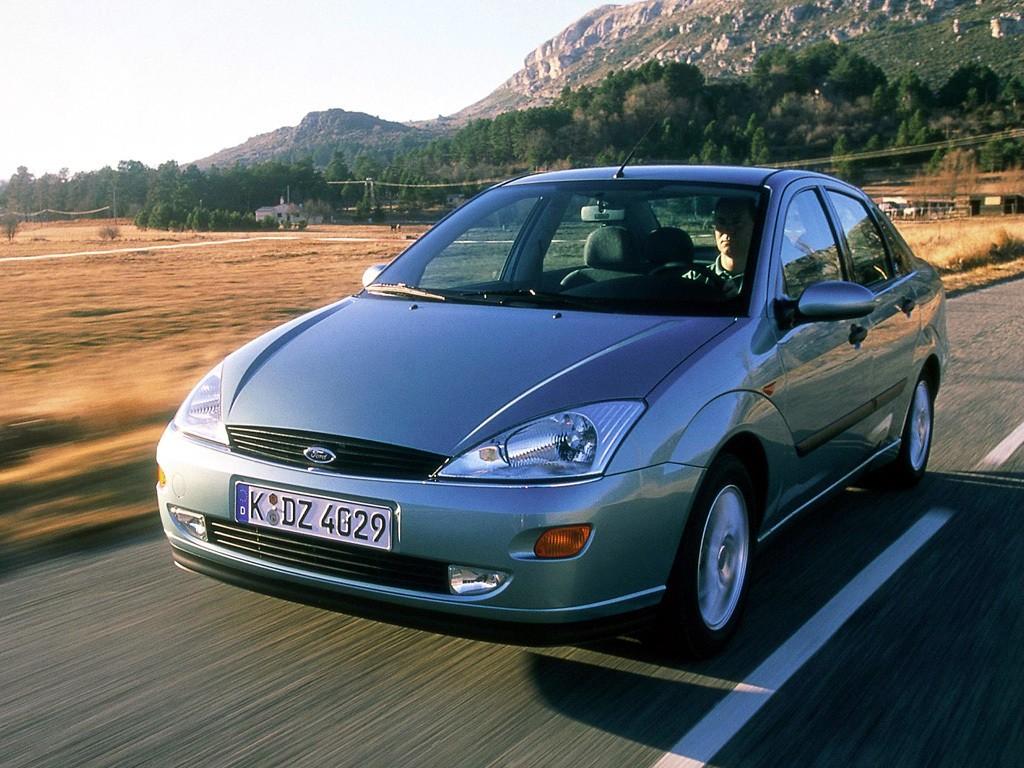
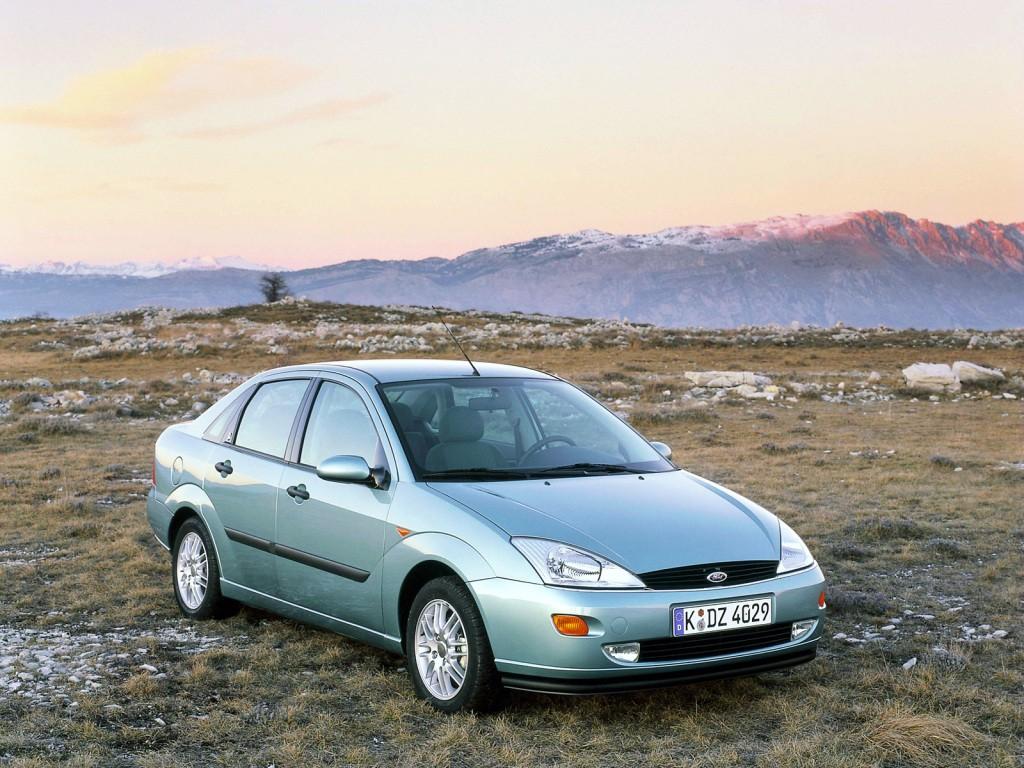
Ford introduced the first generation of the Focus in 1998 as a hatchback, and in the following year, it unveiled the other two versions of it, the four-door sedan and the station wagon, which completed the lineup.
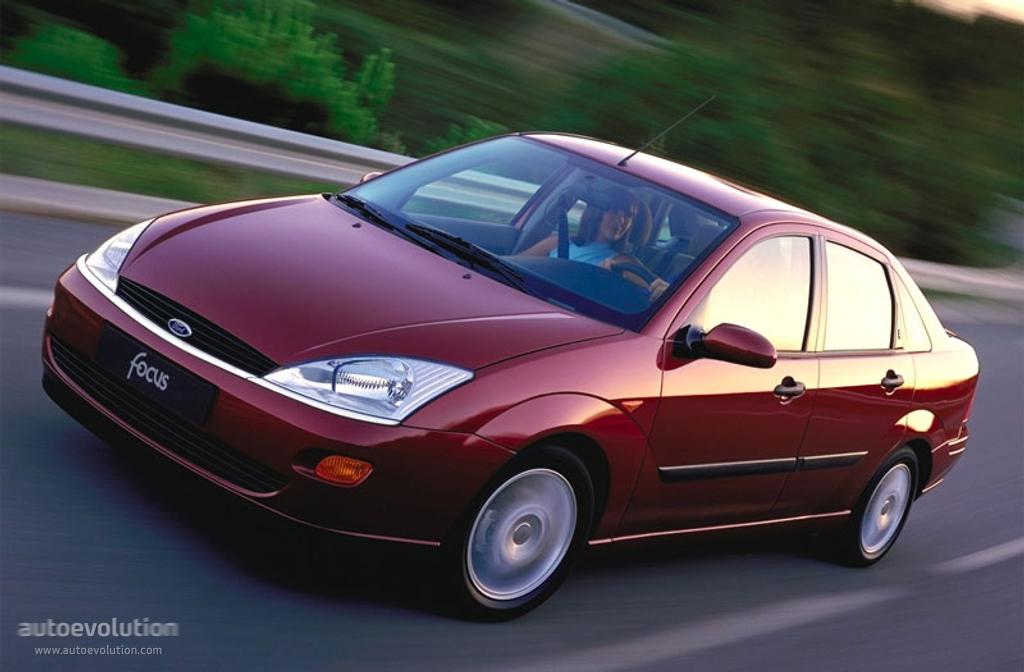
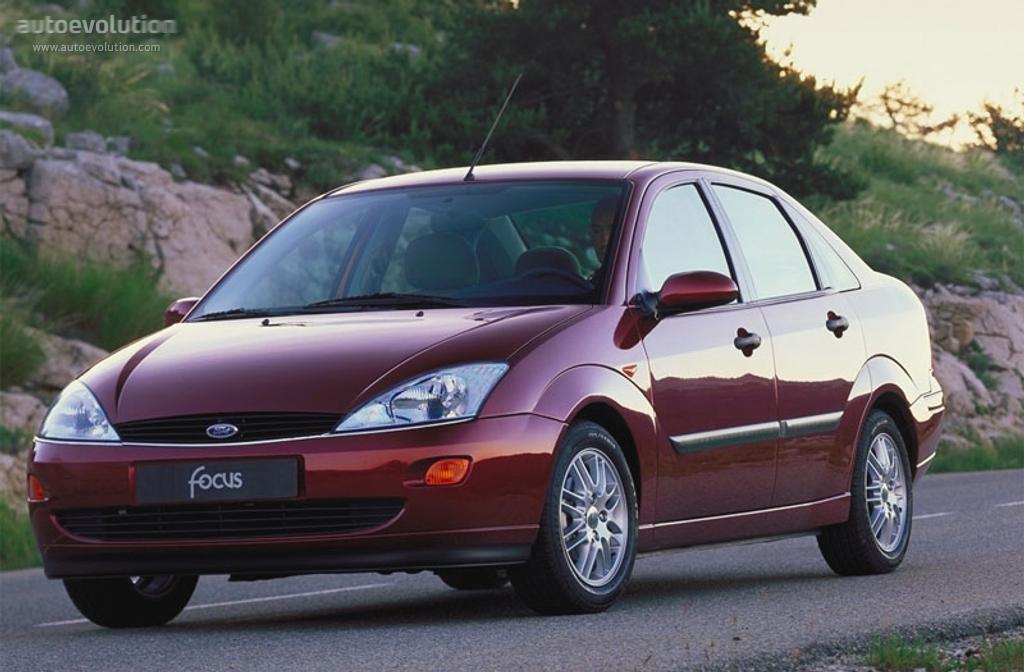
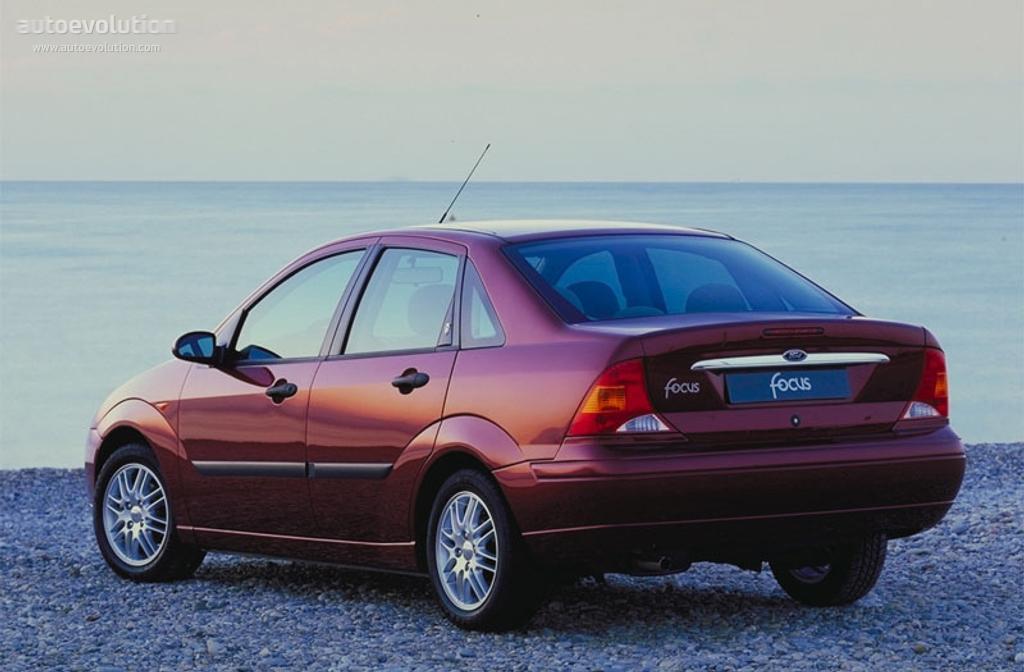
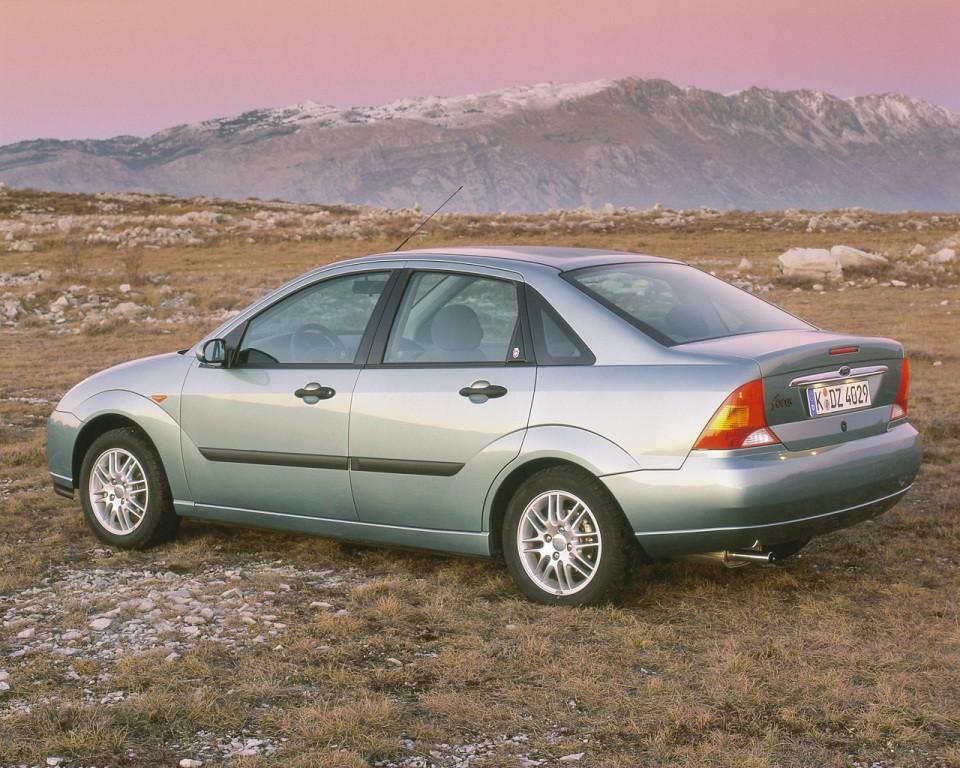
With its polarizing design, the first generation of the Focus targeted customers who had enough of the classic design of other compact-sized vehicles. The new styling, called New Edge in Ford’s language, soon captured other automakers that followed the same ideas of curved lines and sharp corners. While the three- and five-door hatchback of the Focus were already on the market, the introduction of the sedan wasn’t something particularly unexpected. However, Ford managed to create a four-door vehicle that could keep the same traditional values of the brand and mixed them gracefully with the bold styling of the car.
At the front, there were no surprises since the 1999 Ford Focus Sedan shared all components with its hatchback sibling. It had the same triangular, swept-back headlights that didn’t integrate the blinkers. The turn signal lamps were installed on the plastic bumper. On the apron, depending on the grade, the Focus sedan had a reversed trapezoidal-shaped center air intake, and two side scoops flanked it. The automaker offered an option for triangular-shaped fog lamps.
The main challenge for the carmaker’s design team was to create a sedan that looked different but still had the unusual shapes imposed by the New Edge design styling. At the front, the 1999 Ford Focus sedan featured flared fenders. The plastic moldings surrounding the wheel arches continued on the front doors, and the styling of the rear quarter panels followed the same design idea. Ford installed triangular windows behind the rear doors for the greenhouse, enhancing the cabin’s luminosity. Unlike the hatchback, which was ended by a raked-forward tailgate, the sedan version had a sloped rear window followed by a short trunk. Finally, at the back, the automaker placed triangular-shaped taillights that flanked the trunk’s lid opening.
Since the car was designed for families and rental companies, Ford offered its compact-sized sedan with a wide choice of interior options. The base versions were fitted with cloth upholstery, while the top-grade, named Ghia, featured leather seats and wood panel trim for the center console. Fronting the driver was a four-spoke steering wheel adjustable for tilt and reach and the elliptic-shaped instrument cluster. Between the front occupants, on the center console, the automaker installed the gear stick, the handbrake, and cubby storage under the armrest.
Under its skin, the 1999 Ford Focus concealed and packed one of the best platforms on the market. The wide choice of diesel and gasoline-powered engines started with a 1.6-liter, spark-ignited powerhouse, while the top grade was motivated by a two-liter, naturally-aspirated four-pot powerplant. In addition, the automaker provided the vehicle with a choice of two turbodiesel engines.
Press Release
The Ford Focus (first generation) is a compact car which was manufactured by Ford in Europe from 1998 to 2004 and by Ford in North America from 1999 to 2007. Ford began sales of the Focus to Europe in July 1998 and in North America during 1999 for the 2000 model year.
In Europe and South Africa, the Focus replaced the various Ford Escort models sold in those markets. In Asia and Australasia, it replaced the Ford Laser.
Design and engineering
Codenamed CW170 during its development, and briefly known to some Ford contractors as the Ford Fusion, the original Focus took its eventual name from a Ghia concept car which was shown at the Geneva Motor Show in 1991. Certain elements of the design had been seen even earlier in prototypes used by Ford to demonstrate forthcoming safety features, such as the eye-level rear lighting clusters. As a continuation of Ford's New Edge styling philosophy, first seen in the Ford Ka in 1996, and Ford Cougar in 1998, the Focus' styling had been often described as polarising. The styling had been overseen by Jack Telnack and executed by Claude Lobo and Australian designer, John Doughty.
The decision to name the new car the Ford Focus was made in early 1998, as Ford's overheads had been planning to keep the "Escort" nameplate for its new generation of small family cars. A last minute problem arose in July 1998 when a Cologne court, responding to a case brought by the publishers Burda, ordered Ford to avoid the name "Focus" for the German market cars since the name was already taken by the publisher's Focus magazine. This eleventh hour dispute was overcome, however, and the car was launched without a different "German market" name.
Rear suspension
Engineers for the Focus, including Richard Parry-Jones, developed a class-leading, space-saving independent multi-link rear suspension, marketed as Control Blade suspension, combining the packaging of a trailing arm, with the geometry of a double wishbone suspension . The system was developed from that used in the CDW27 Ford Mondeo estate, but with various modifications to make it simpler and cheaper to build and therefore economically viable on a mass-market vehicle.
Where many competitors in the compact class, or small family car (European) class, used the less expensive non-independent twist beam suspension, Control Blade offered enhanced elasto-kinematic performance, i.e., strong body control, sharp and accurate steering regardless of the car's attitude, and an absorbent and quiet ride over bumps.
Unlike conventional multi-link suspension, Control Blade features a wide, simple, uniform thickness, pressed steel trailing arm with hub carrier - taking the place of two longitudinal locating rods, eliminating an expensive cast knuckle, and offering the same level of body control - with a lower center of gravity, reduced road noise, and at lower production cost. The long rear lateral arm controls toe, a pair of shorter front lateral arms, vertically above each other, control the camber, and the Control Blade reacts to brake and traction loads.
In testing the suspension in 2000, Motor Trend writer Jack Keebler noted "The Focus' average speed of 62.6 mph through our slalom makes it faster around the cones than a $62,000 Jaguar XJ8L and a $300,000 Bentley Continental. The impression is of having plenty of wheel travel for gobbling the larger stuff and big-car, full-frame isolation when encountering expansion joints and smaller road imperfections."
Following the 1998 introduction of Control Blade suspension and popularization by the Focus, other manufacturers (e.g., Volkswagen with the Golf V) began offering multi-link design rear suspensions in the compact class, or small family car (European) class.
Manufacturing
Historically, the Saarlouis, Valencia, and Halewood plants had produced the Escort, however the Focus was only produced at Saarlouis and Valencia since Halewood was to be switched over to production of the Jaguar X-Type. However the final generation of the Escort remained in production in Halewood until 2000 as a budget alternative to the Focus, and the van versions continued until 2002 until its replacement by the Focus-based Ford Transit Connect.
Focus production also took place in Santa Rosa, Philippines; General Pacheco, Argentina; Chungli City, Taiwan and Vsevolozhsk, Russia.
South America
The Mark 1 Focus remained in production until 2008 in General Pacheco, Argentina for the South American Market. The last of the Mark 1 Focus produced in Argentina (2008 Version) featured either a 1.6 L Zetec Rocam Flex Fuel Engine or 2.0 L Duratec HE Engine or the 1.8 L Duratorq Diesel Engine. Assembly of Mark 2 Focus started in 2008 for the 2009 model.
However, in Brazil, Ford do Brasil offered this until 2009, in 1.6 (Flex Fuel - 105cv gasoline/112cv ethanol) GL or GLX hatchback or saloon versions.
Safety
The Mk 1 Ford Focus received 4 out of 5 stars for occupant safety, and 2 out of 4 stars for pedestrian safety in its EuroNCAP tests (69% frontal, 83% side, 28% pedestrian). In Australia, the 2002-2005 Ford Focus was assessed in the Used Car Safety Ratings 2006 as providing "average" protection for its occupants in the event of a crash.
Engines
Gasoline engines available were the well-proven 1.8 L and 2.0 L Zetec-R units from the Ford Mondeo and 1.4 L and 1.6 L versions of the Zetec-S/SE units Also found in the Ford Fiesta and Ford Puma. The ST170 and RS performance models used modified versions of the 2.0 L Zetec-R. Originally, the only diesel engine available was the Endura TDDI (a development of the old Deutz-designed motor which Ford had been using since the 1980s). This was replaced in 2002 by the Duratorq TDCI.
Body styles
5-door hatchback
4-door saloon (Mostly all Europe)
3-door hatchback (Not available in Japan and New Zealand)
5-door estate (Only available in North America, Europe and Japan)