


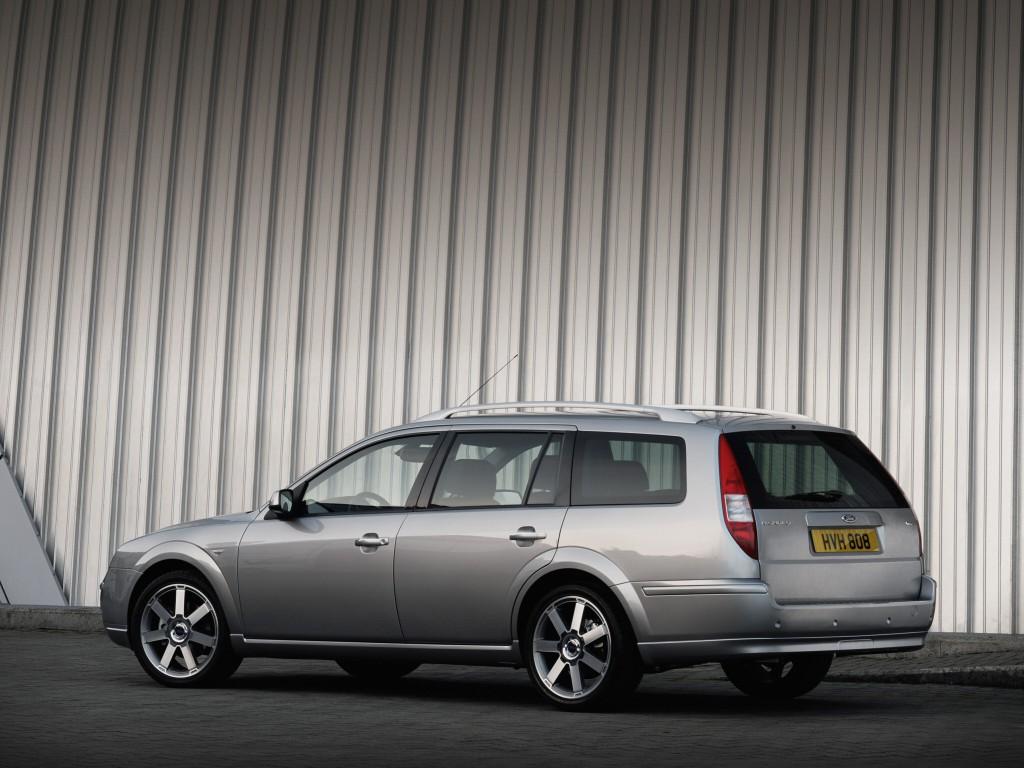
Description
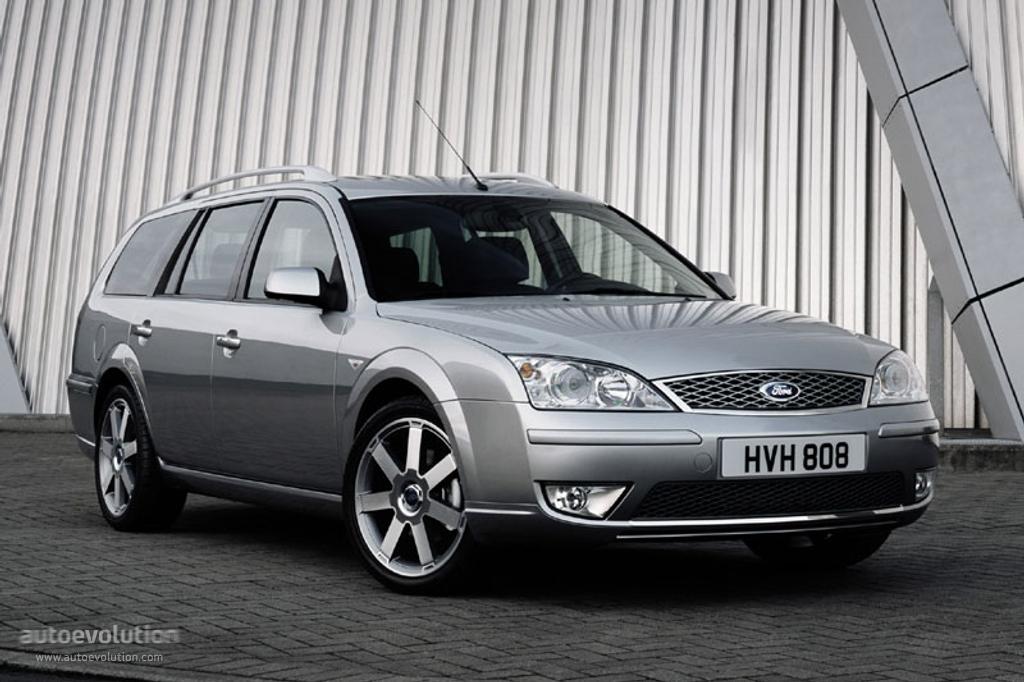
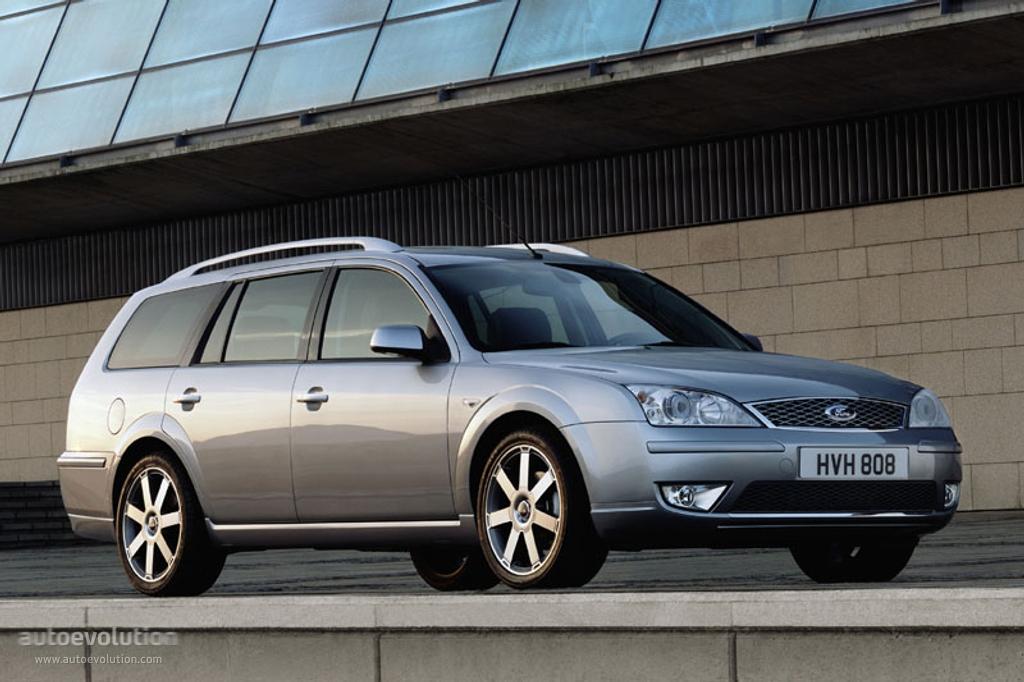
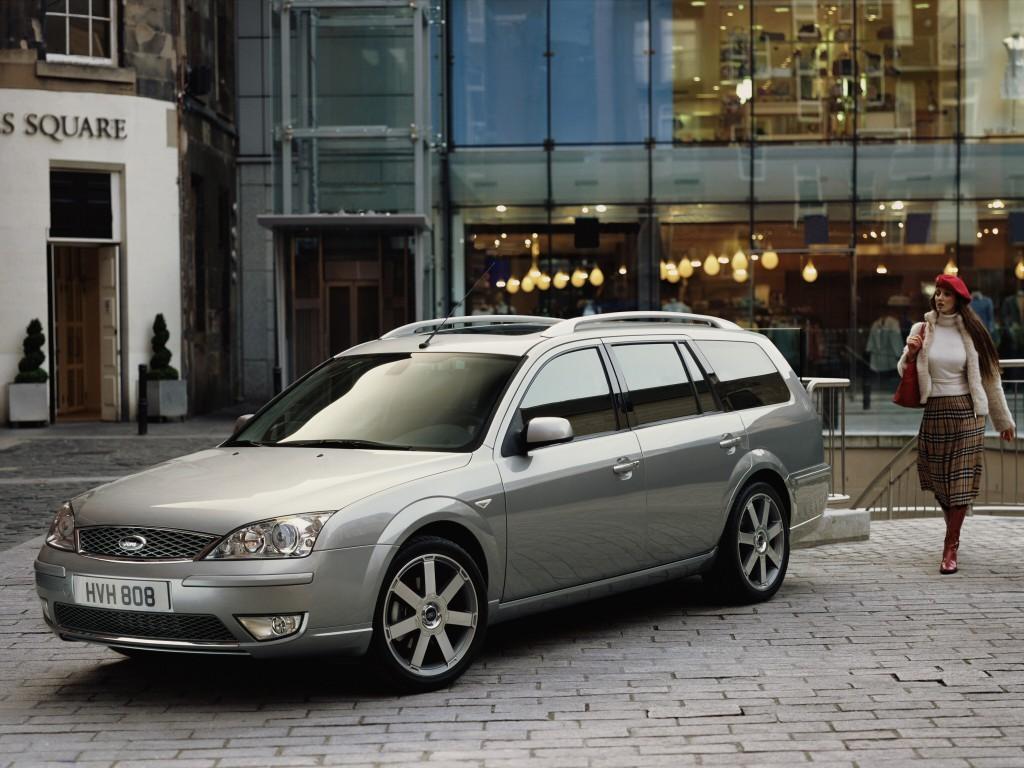
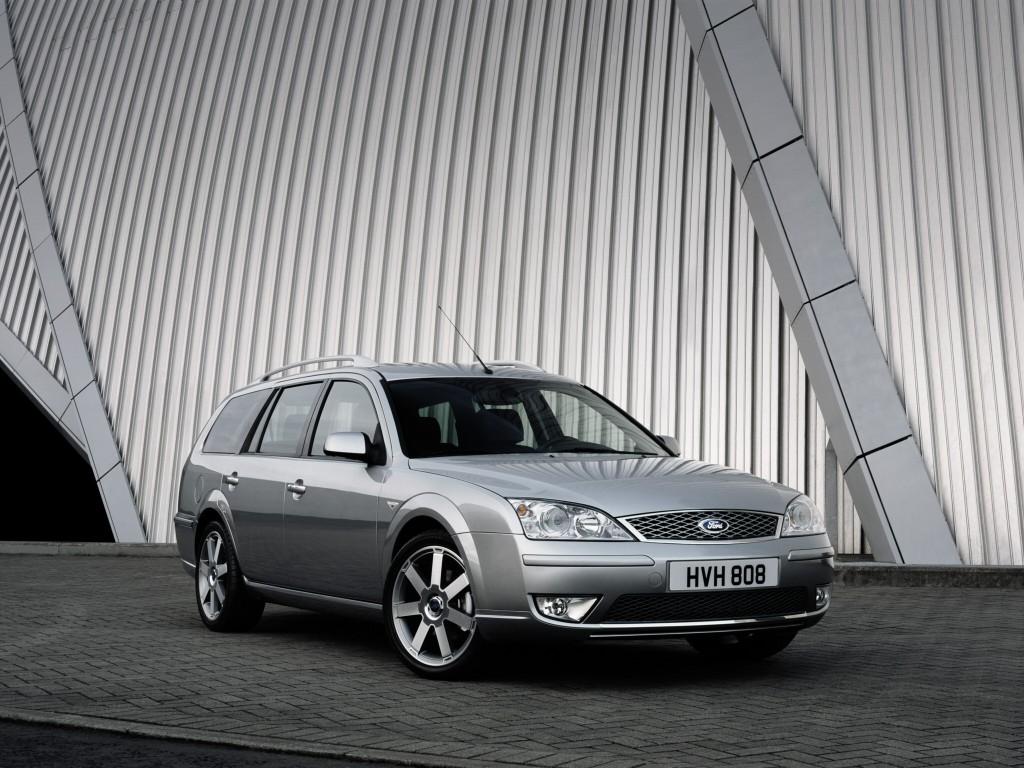
While Ford was preparing the launch of the third generation of the Mondeo, its marketing department thought that the wagon still had something to say.
It was one of the largest vehicles in its class, and the cavernous trunk was good to move a student from home to college into one trip without the need of a trailer attached. The big station-wagon was designed to fill the needs of a family who didn't want an MPV. With its rear seats folded, it was good enough as a sleeping place.
With its triangular headlights swept over the hood and the slim curved trapezoidal grille, the Mondeo's second generation was a hit. It was introduced to the market in 2000, but its design was not outdated. Still, Ford decided to do a facelift on it and slightly changed the front bumper and the headlights.
The interior was good looking with a dashboard that offered the same two big dials for the tachometer and speedometer and two small LCD displays on the bottom of them. A nice touch of luxury feel was the oval clock on the center stack, above the optional infotainment system, which featured a CD and sat-nav. Since the Mondeo was well known for its speed cornering abilities, the carmaker decided to install higher bolstering on the front seats, to keep the occupants in place. In the back, the split-folding seatback allowed the trunk to be expanded to 1700 liters (60 cu-ft) from a decent 538 liters (19 cu-ft).
The 2005 model received a new engine lineup, including the Duratorq diesel engines offered in four different power outputs.
Press Release
The Ford Mondeo second generation model was launched by Ford in October 2000. This Mondeo was considerably larger than its predecessor, and although Ford abandoned its New Edge design theme for the second generation, it was their first vehicle to fully benefit from the Prodigy concept car. This gave it an overall effect which many critics felt was more restrained and mature, if much less distinctive. Two of the old car's biggest weaknesses, the modest rear legroom, and uncompetitive diesel version were addressed by a longer wheelbase and the new Duratorq diesel engine. The basic chassis and suspension design was carried over from the previous generation, which meant that the car continued its predecessor's reputation for class leading handling and ride. This Mondeo came to Mexico, replacing the North American built Ford Contour, and was sold from 2001 to 2007, when the Ford Fusion replaced it. The North American market Fusion and Ford Five Hundred/Taurus sported very similar styling, inside and out.
Following the standard setting interior of the Volkswagen Passat (B5) in 1996, Ford paid a great deal of attention to the second generation Mondeo's interior and was the first mainstream manufacturer to react to the new standard set by Volkswagen. Ford dispensed with the rounded American style interior of the first generation, and developed a more sober 'Germanic' design, which not only seemed more sophisticated but, more importantly, was of a higher quality due to the use of more expensive materials.
This Mondeo simplified trim levels a lot, for example the UK trims had been simplified down to this: LX, Zetec, Zetec S, Ghia, Ghia X and ST. Despite this, a facelift in 2003 saw the introduction of some new trim levels. Titanium and Titanium X slotted in between Zetec S and Ghia, and ST220 slotted in above ST.
As with its predecessor, passive safety was a major selling point of the 2000 Mondeo. With an even stronger bodyshell, Ford introduced its so-called "Intelligent Protection System" (IPS), which used an "intelligent" array of sensors based on a neural network, to decide the best combination of safety devices (traditional front passenger airbags, side airbags and curtain airbags) to deploy for a given crash situation. To enhance active safety, all models were fitted with anti-lock brakes and electronic brake-force distribution, with electronic stability program (ESP) available as an option. Ford's marketing of the time claimed the Mondeo was 'One of the safest places to be'. However, Euro NCAP's testing of the 2000 to 2007 Mondeo found that it protected worse than most key rivals (Vauxhall Vectra, Citroën C5, Toyota Avensis, Volkswagen Passat), achieving a lower-end 4 star rating. Ford redesigned part of the car and it was re-tested, but the higher-than-average risk of chest injury to the driver in the frontal impact remained.
The Mondeo established itself as Britain's most popular automobile in its class and held this position every year from 2001 onwards, though this size of car has fallen slightly in popularity during the 2000s. This version of the Mondeo has never come higher than sixth in the SMMT's official list of the top selling cars in the UK each year. In 2003, it came tenth in the list.
Engines
For the second generation Mondeo, the Zetec engine was dropped, while the all-new 1.8 and 2.0 L Duratec engines were introduced. The standard 2.5 L V6 engine was carried over, while a 3.0 L version was developed for the ST220 and higher trim models.
Unfortunately, there was a design flaw with the new 1.8 and 2.0 L petrol units with the butterfly valves in the inlet manifold, which could cause severe engine damage when they failed. The plastic components of the butterfly valves wear out too quickly and when loose enough can result in them falling apart and releasing metal and plastic parts into the engine cylinders, potentially causing severe engine damage (How to Diagnose) The part was upgraded by Ford in late 2002 to early 2003 and this prevented the problem from occurring in later engines.
The archaic Endura-D 1.8 L turbodiesel engine was dropped, and replaced by a more sophisticated 2.0 L 16v Duratorq common rail (TDCi and TDDi) unit with a fixed or variable geometry turbine, this clever turbine system allows a certain amount of overboost, giving an extra 10% or so of torque for short periods. This engine, known within Ford as the "Puma"-type Duratorq, was first seen in the Transit in detuned form.
A new automatic transmission was added to the range called the Durashift. This unit has five gears and may be shifted manually or shifted like an automatic. A six-speed manual transmission was also added to the range, instead of just having a five-speed manual as seen in the previous model.
In June 2003, the Mondeo was given a very mild upgrade, the new models being identifiable by the larger chrome honeycomb grille, a new central dashboard made from higher quality materials, with electronic climate control, either a standard Ford radio, Sony radio, or a satellite navigation radio/CD player, which also has climate control built into the unit in lieu of the space taken up by the unit. The Durashift automatic is now available with steering wheel control. The petrol engines were revised at this stage also - the new SCI (direct injection) version of the 1.8 L Duratec engine was introduced, which generates 4 kW (5 PS) more than the standard unit. In addition, equipment was upgraded across the range - with trip computer now standard on all models, and cruise control is also standard in selected trim levels and markets.
The main Sports version was the ST220, replacing the ST200 from the last model series. This was available in Liftback, Estate and Saloon form. The ST220 produced 226 bhp (169 kW) from the newly developed 3.0-litre V6 engine, which made it capable of 0 to 62 mph (100 km/h) in 6.6 seconds, and on to a maximum speed of 155 mph (249 km/h). There was also a ST TDCi, a sports version of the regular diesel. This, available in all forms, had a 2.2-litre 4-cyl diesel engine, developing 153 bhp (114 kW). It accelerated from 0 to 62 mph (100 km/h) in 8.2 seconds, and had a maximum speed of 140 mph (230 km/h).
The higher range models, (i.e. the Zetec S, Ghia X and Titanium X), now had two V6 engines available; one being the existing Duratec 25 carried over from the previous model, and one being a Duratec 30; a quieter, smoother variant of the ST220 3.0-litre engine, which produced 206 bhp (154 kW). This was not dissimilar in performance to the ST220, with a 0 to 62 mph (100 km/h) time of 6.8 seconds and a top speed of 151 mph (243 km/h).
In 2005, there were two new Duratorq common rail (TDCi) options, a 2.2L with 114 kW (155 PS) and a detuned version of the 2.0L with 65 kW (89 PS). Also, the Seat Belt Warning System was added and is now standard, with an audible/visual warning signal reminding the driver to fasten his/her seat belt. The styling was upgraded again, the most notable difference being tweaked taillights.